Star Battle geometries
What if you could play Star Battle on different geometries? Now you can!
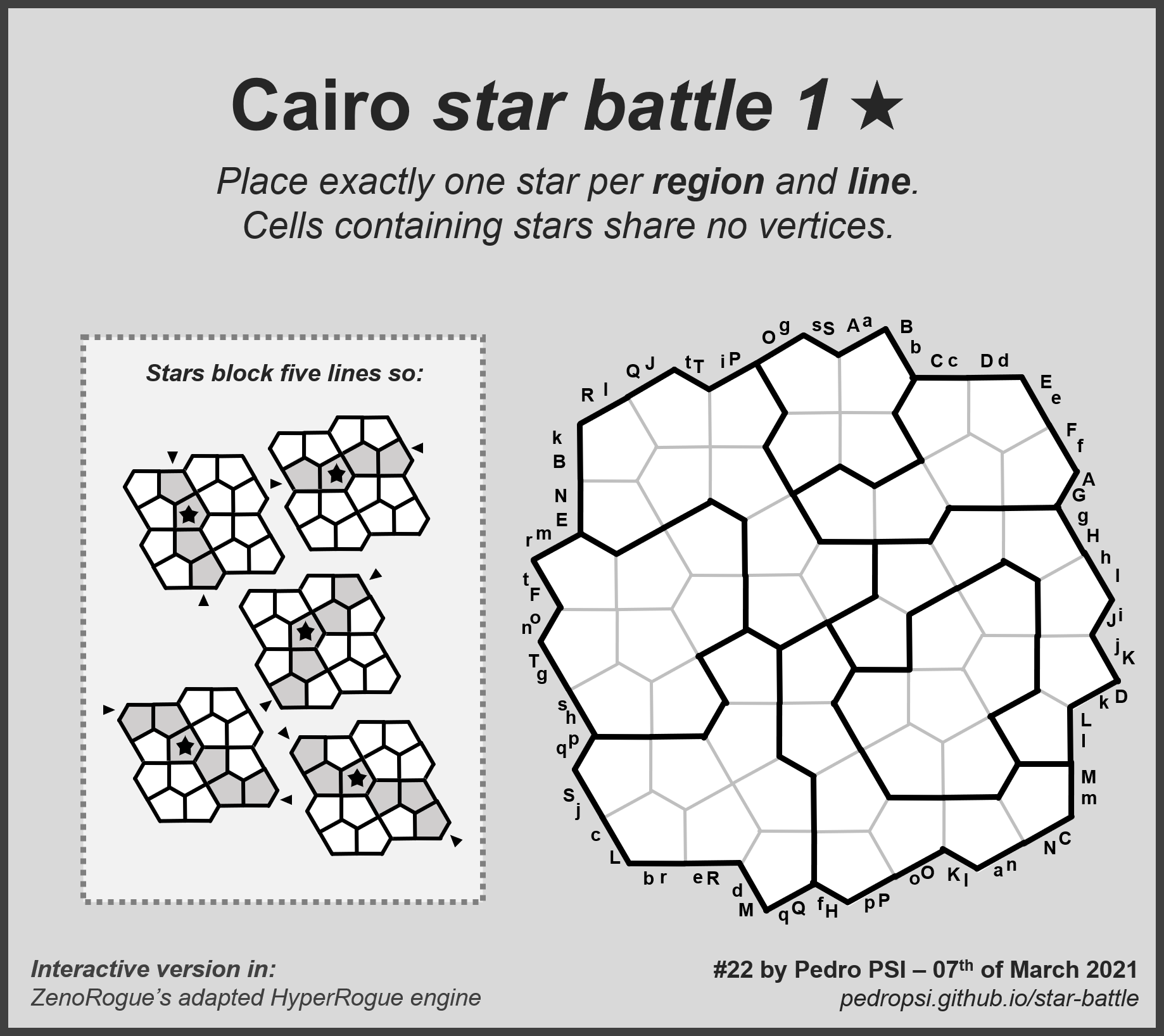
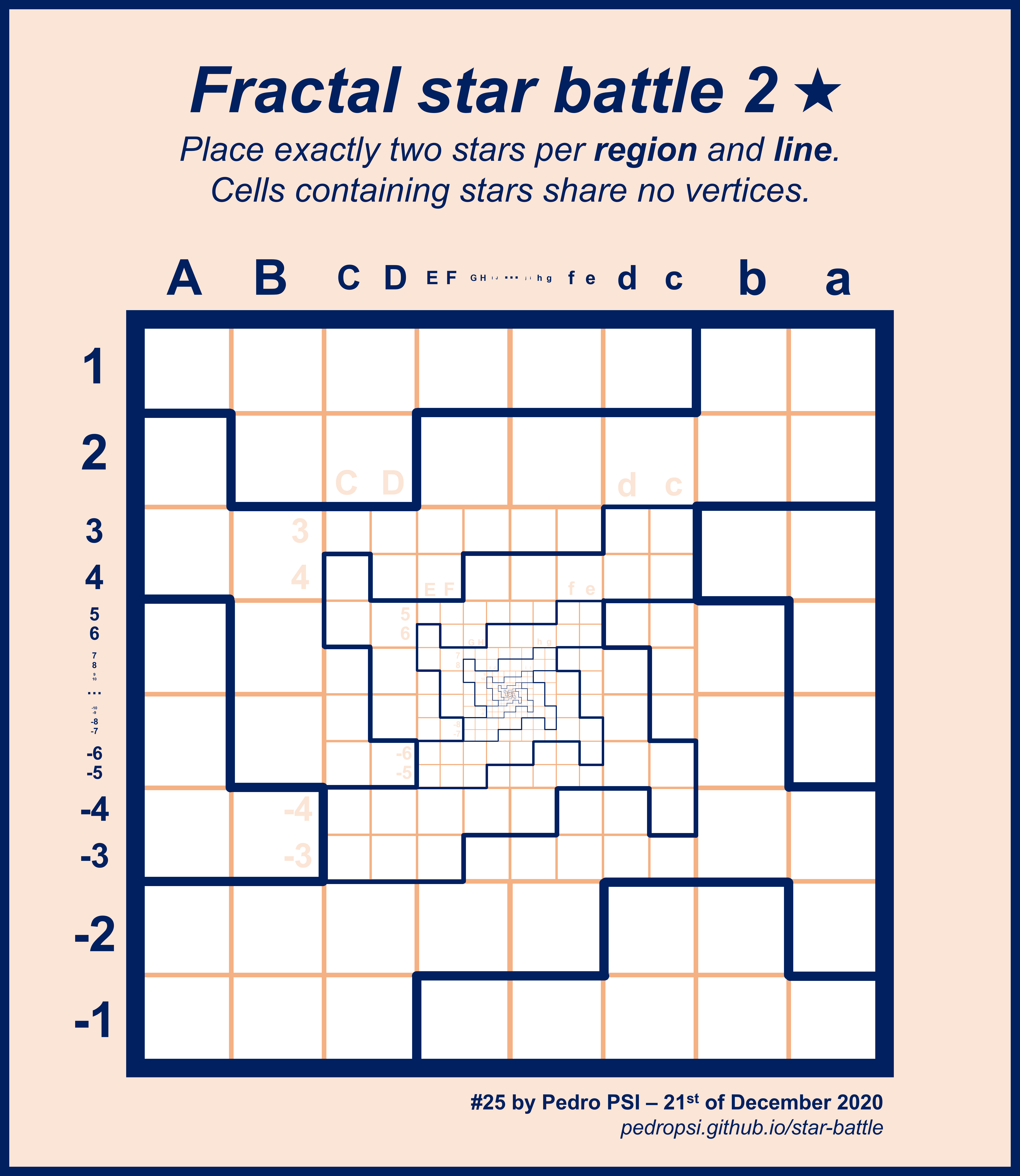
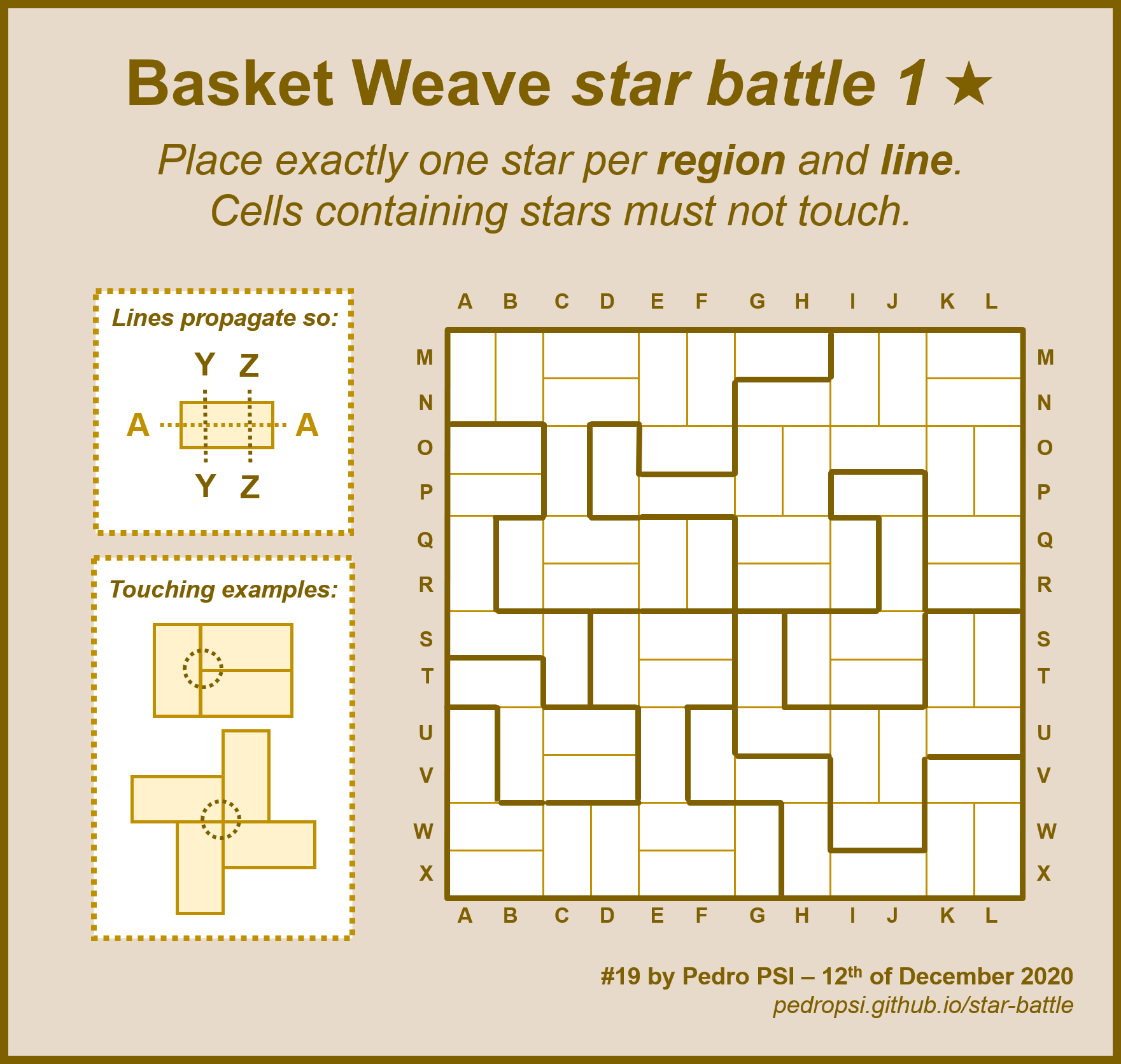
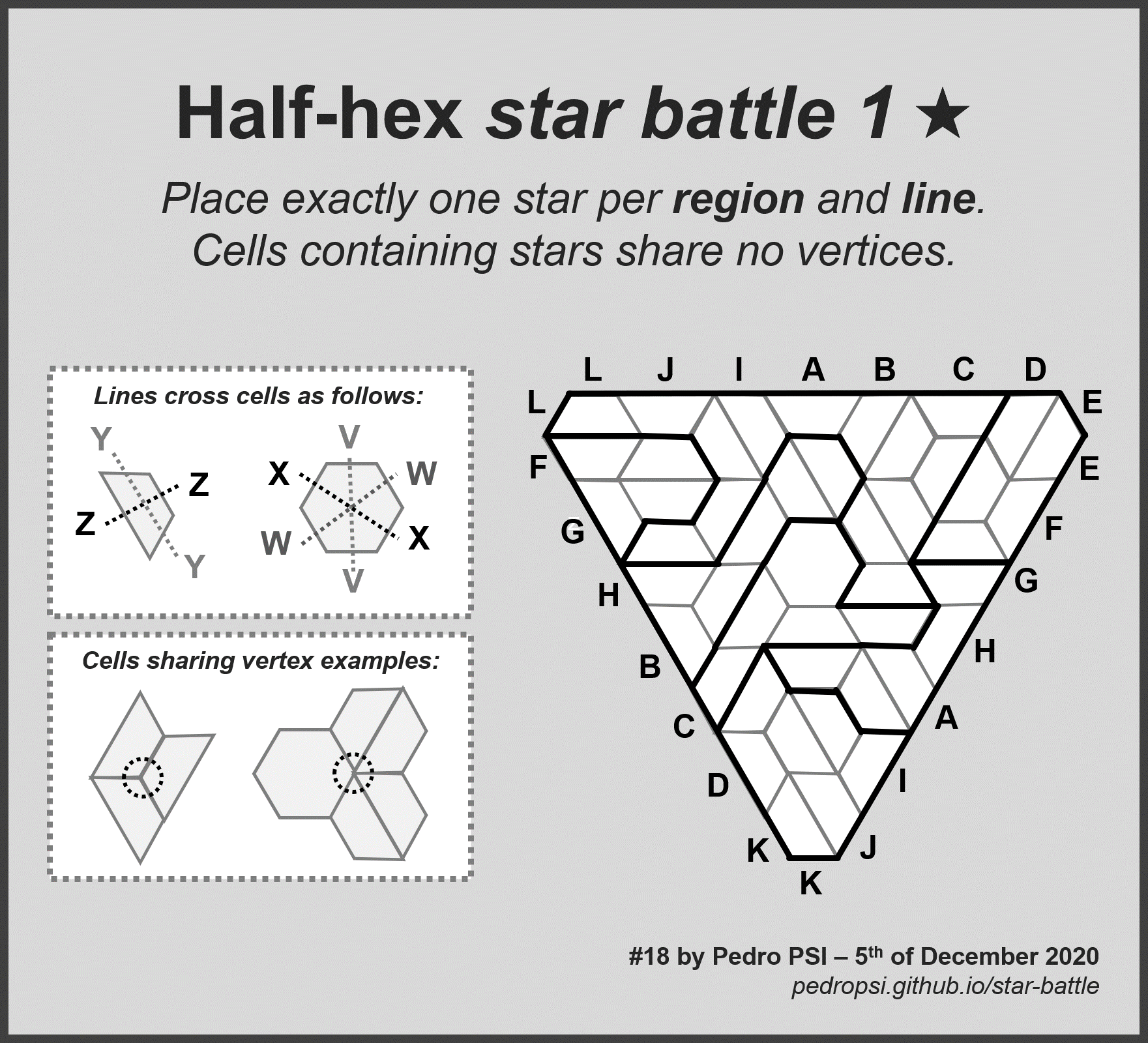
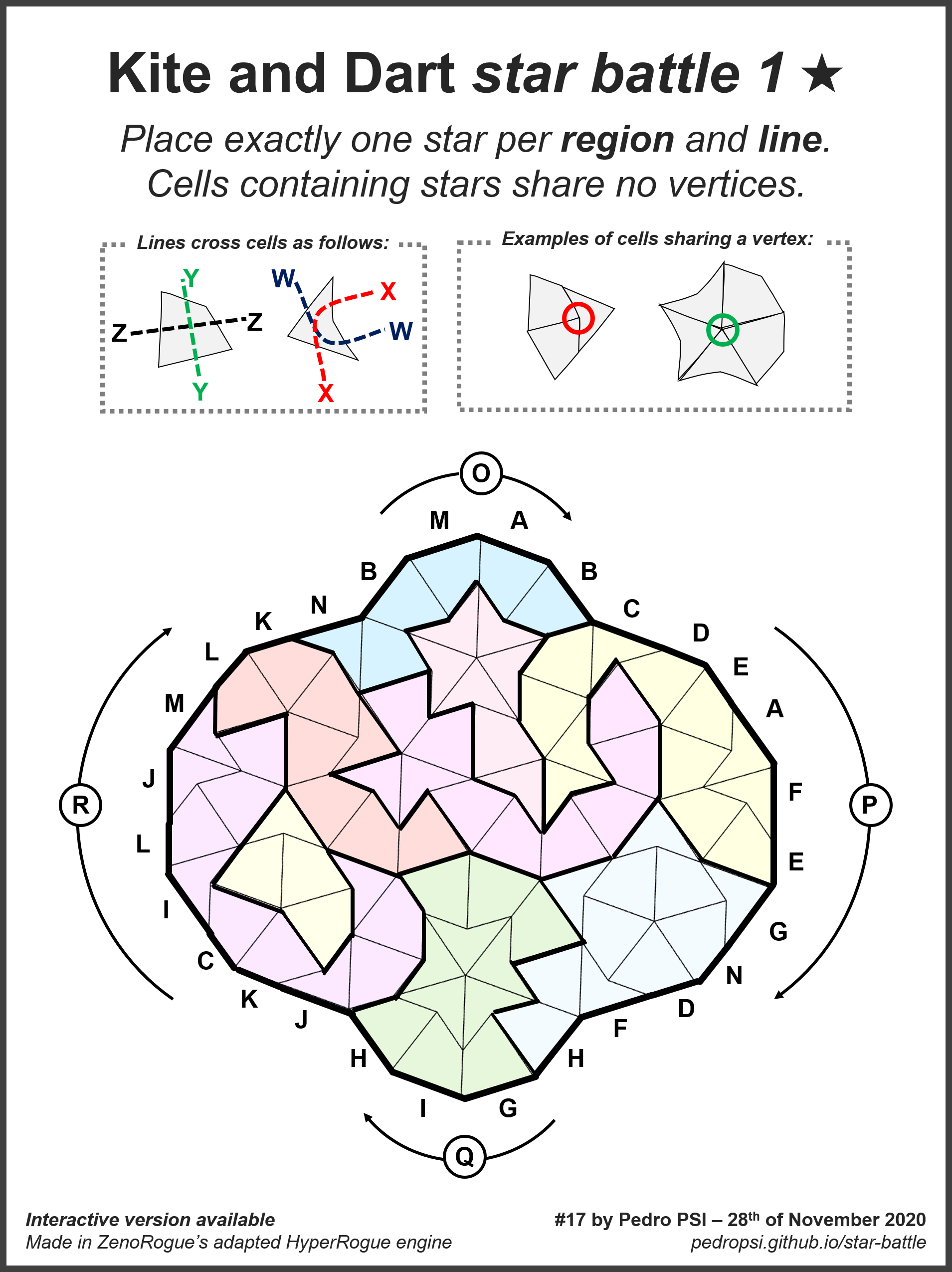
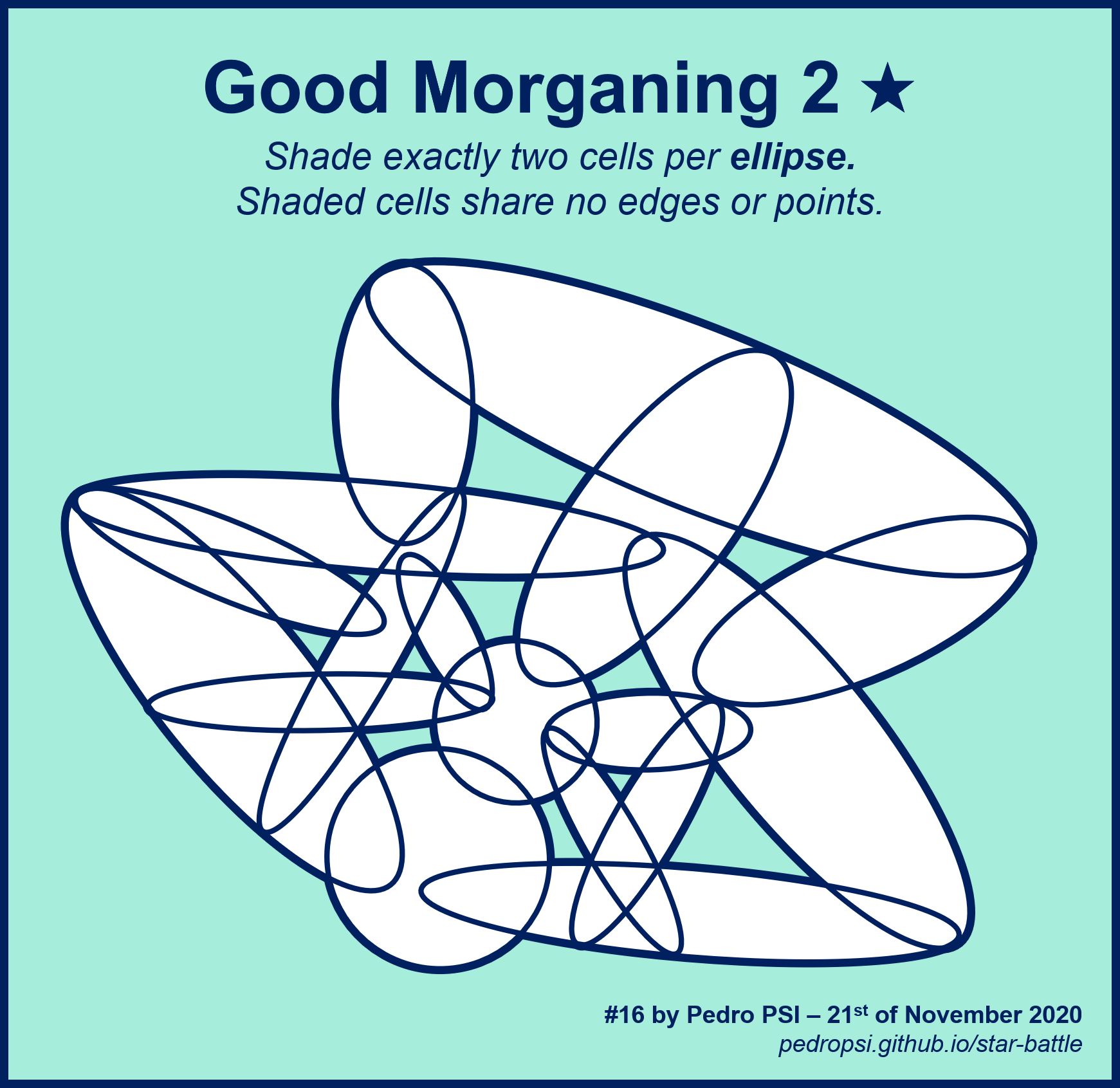
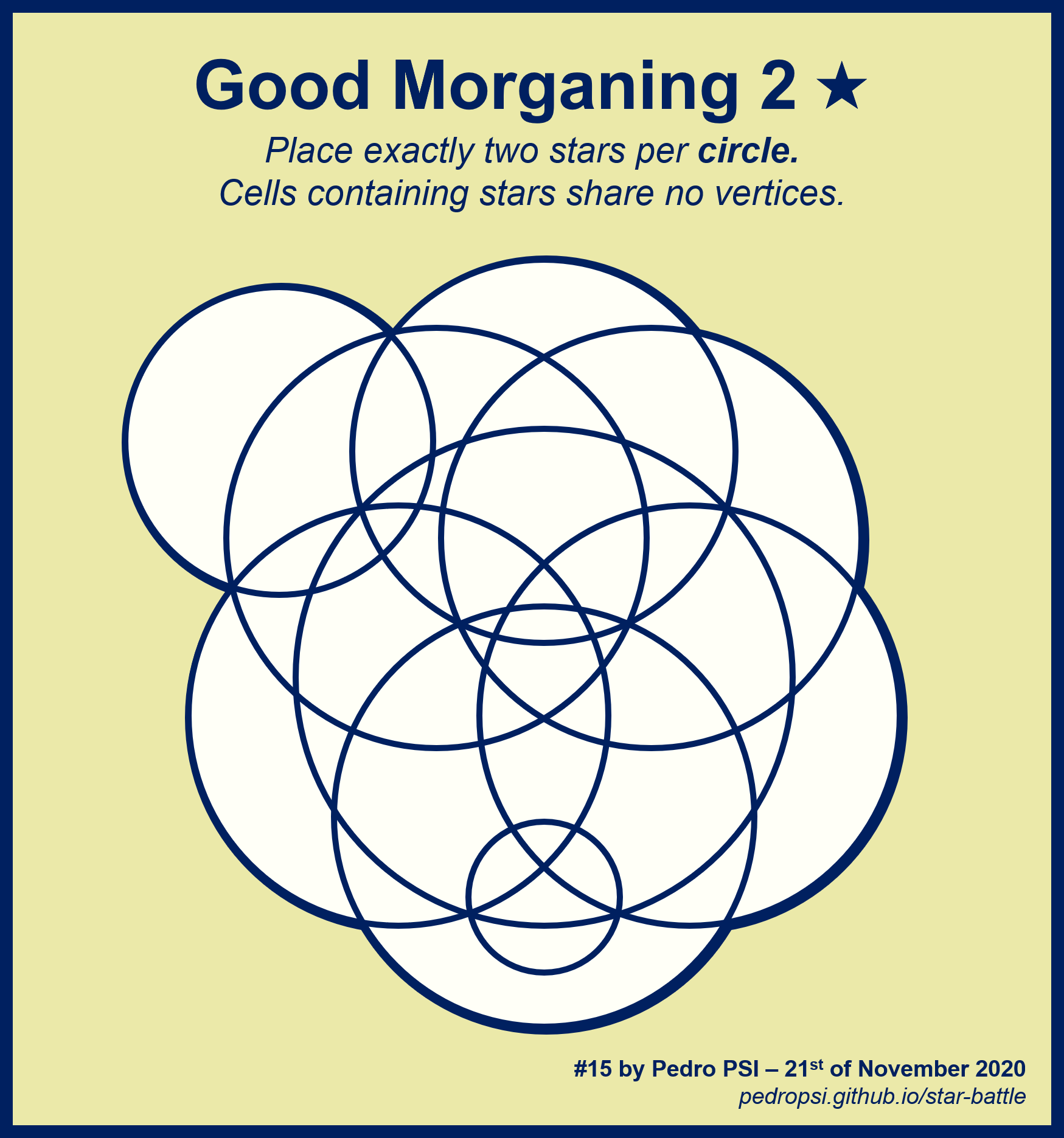
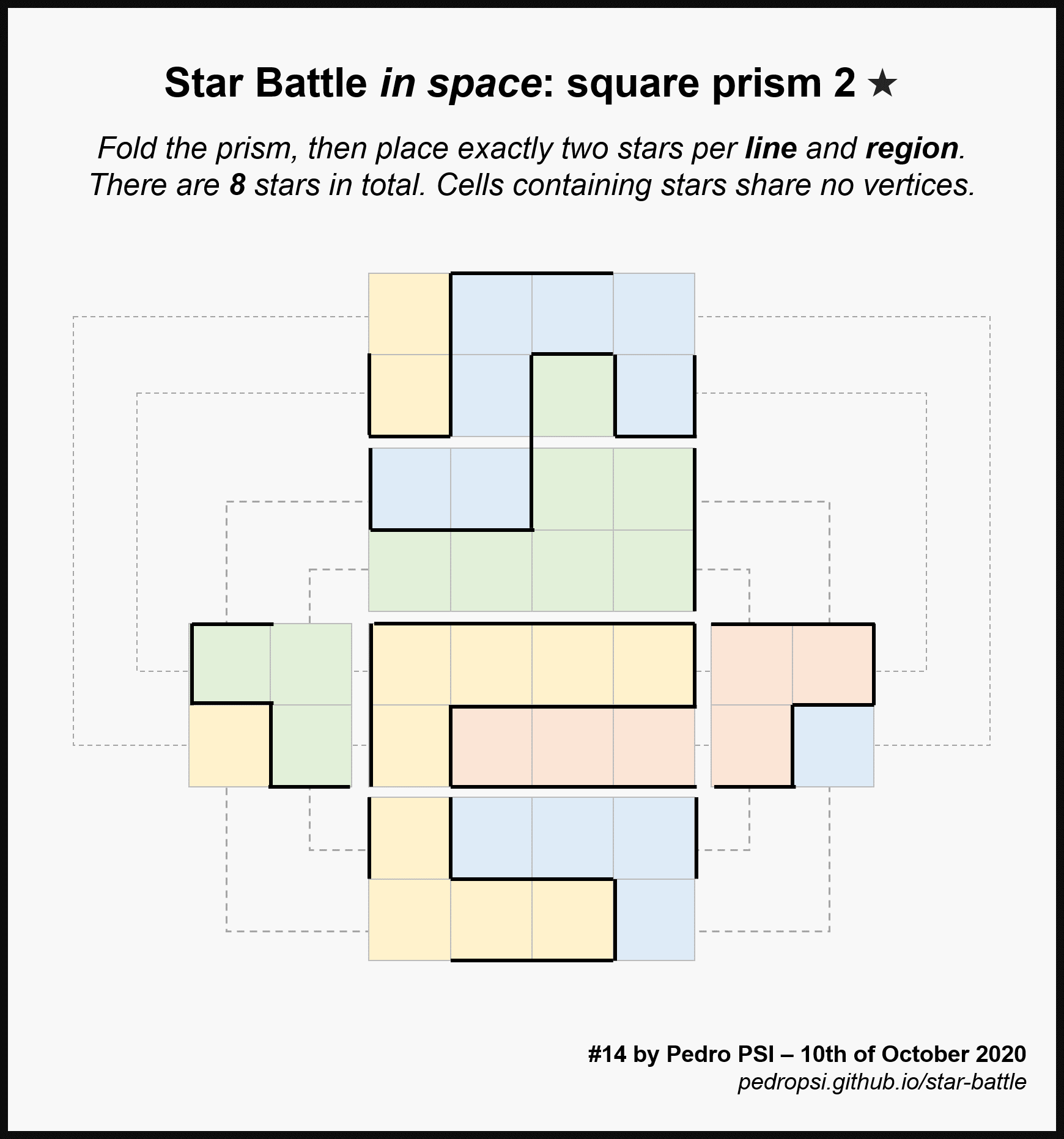
Geometric star battles include triangular, penrose, Amman-beenker and hyperbolic tilings of the plane, star battle in polar corrdinates (polar star battle) and in three dimensions, folding cubes, icosahedron, and möbius strip (star battles in space)! The puzzles come in varying difficulties. One star puzzles tend to be easier, and two star puzzles a bit harder, but not always! Choose between old-school Paper star battles and the newest Interactive star battles!
Paper star battles
To play these, all you need is pen and paper! Or, if you prefer, the flood-fill tool will work on every puzzle, e.g using MSPaint or other image editing software. Shall a star battle be named in space, then part of the challenge is folding the puzzle either in your head or an actual paper version.
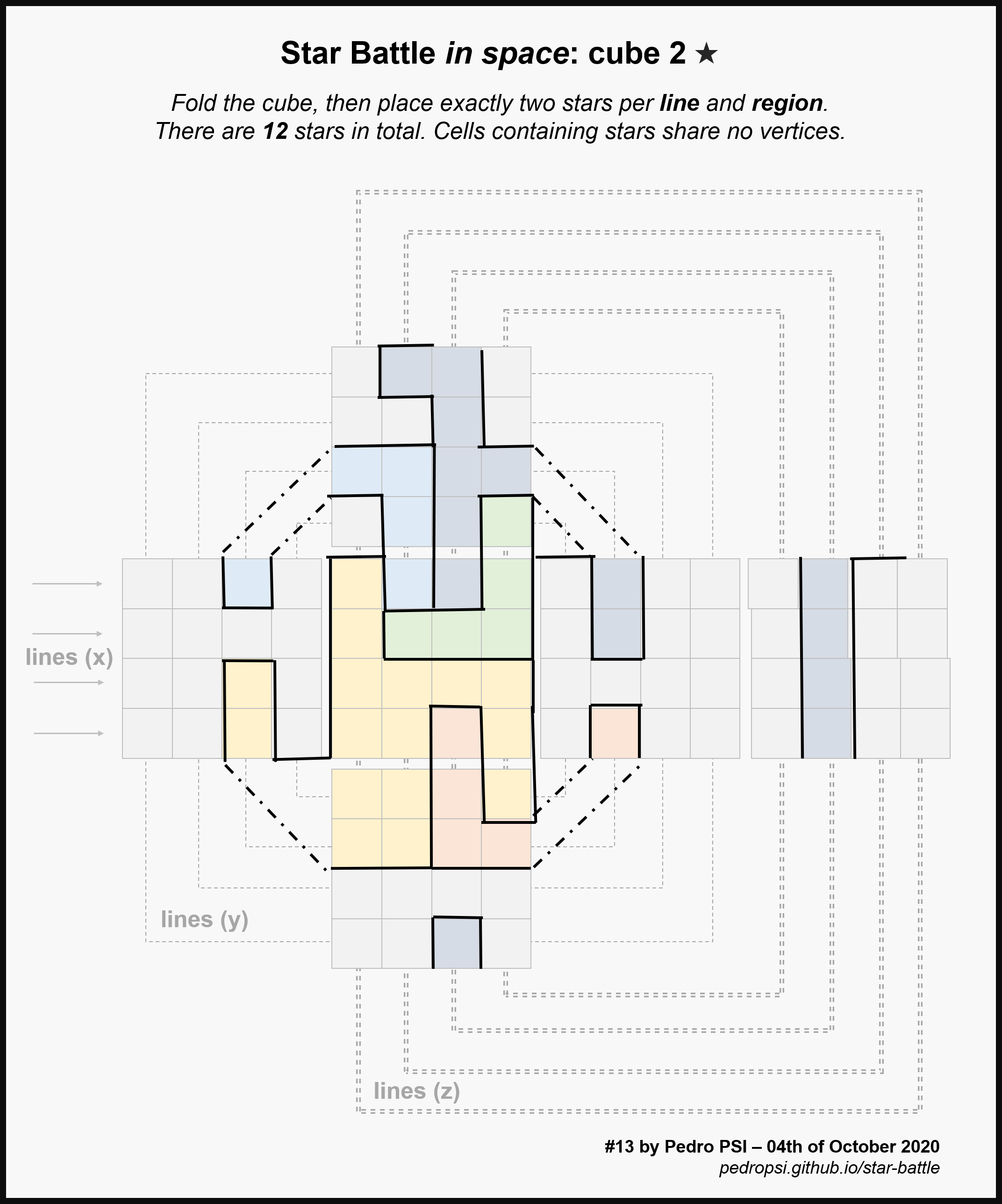
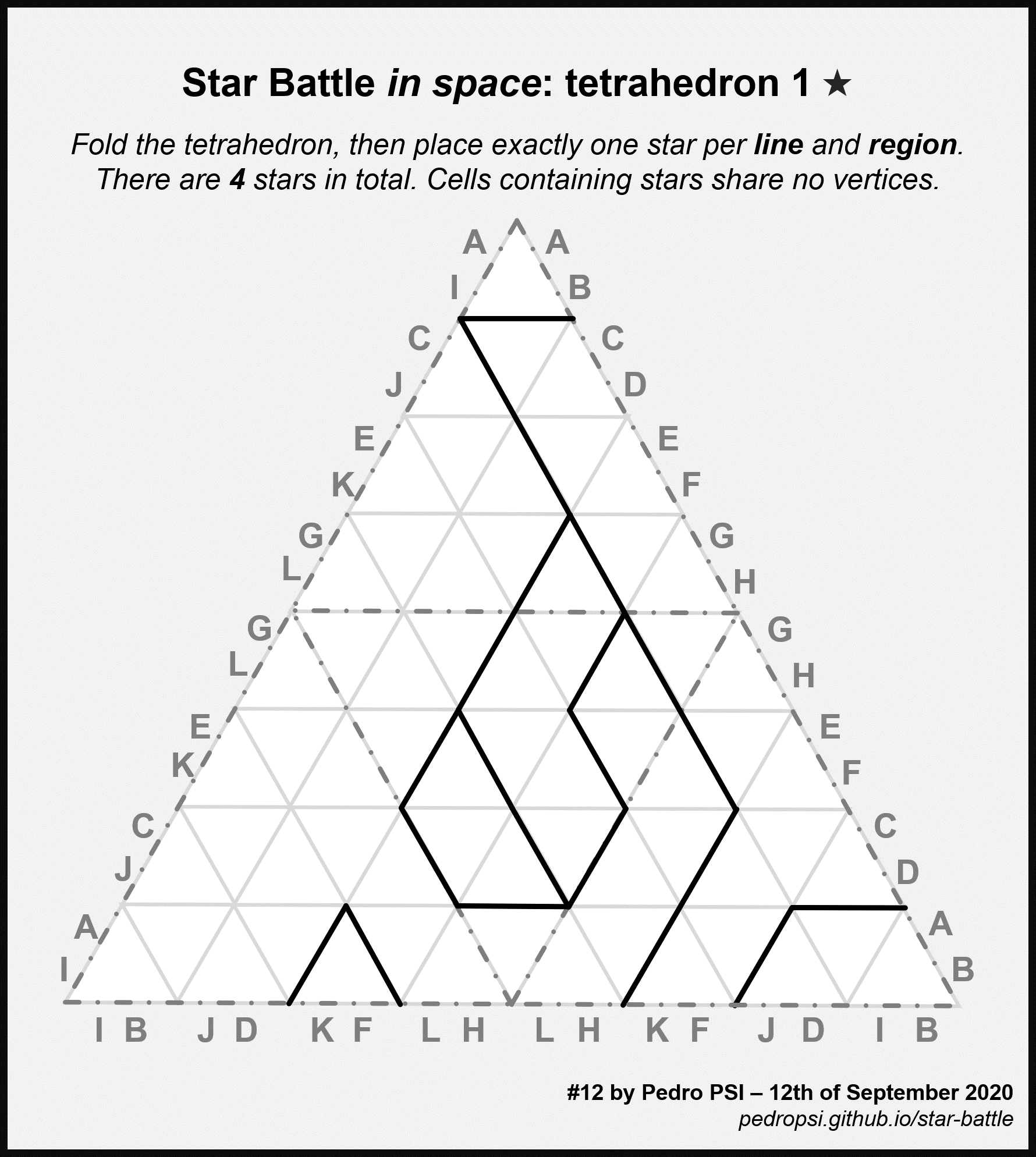
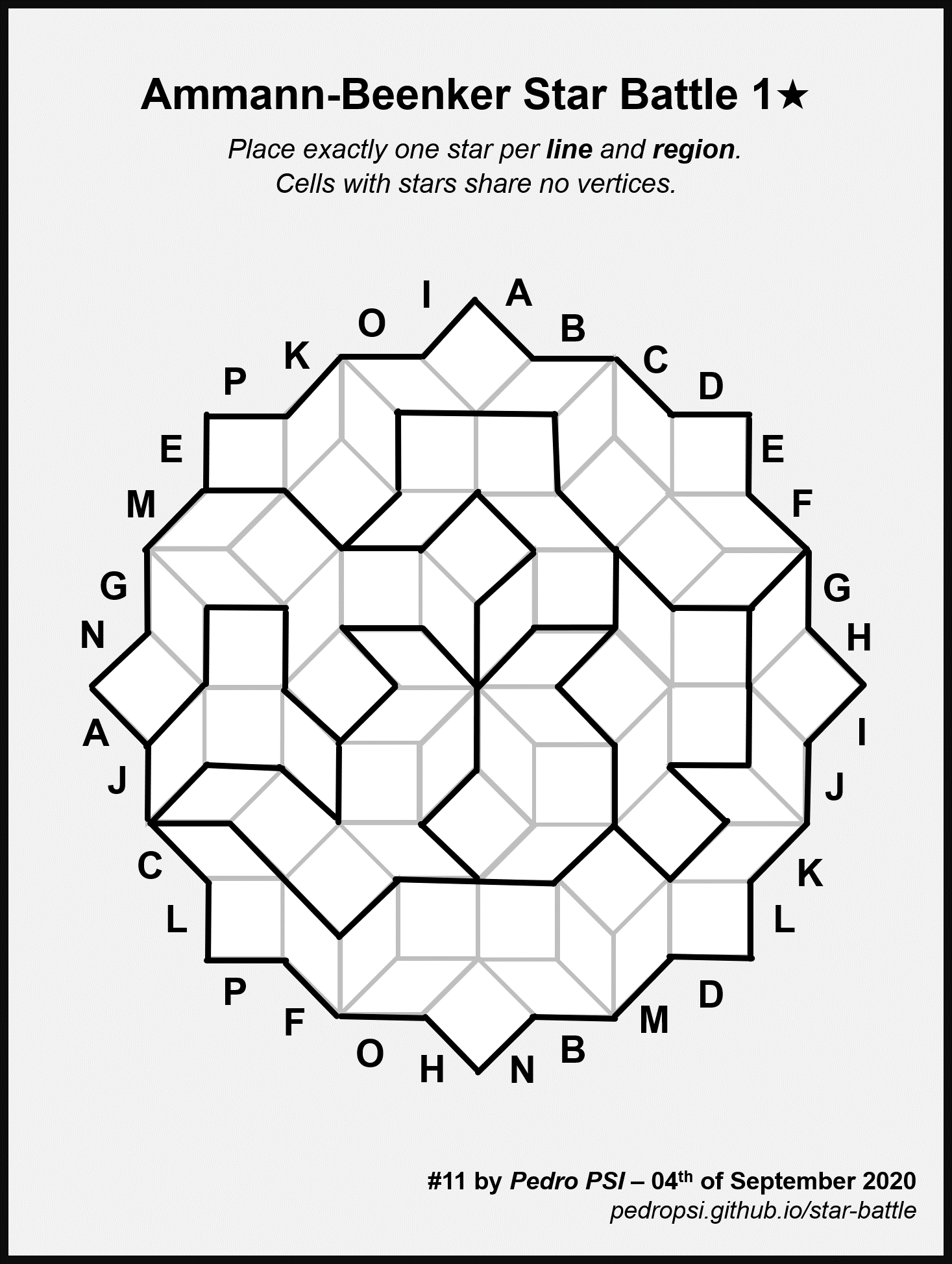
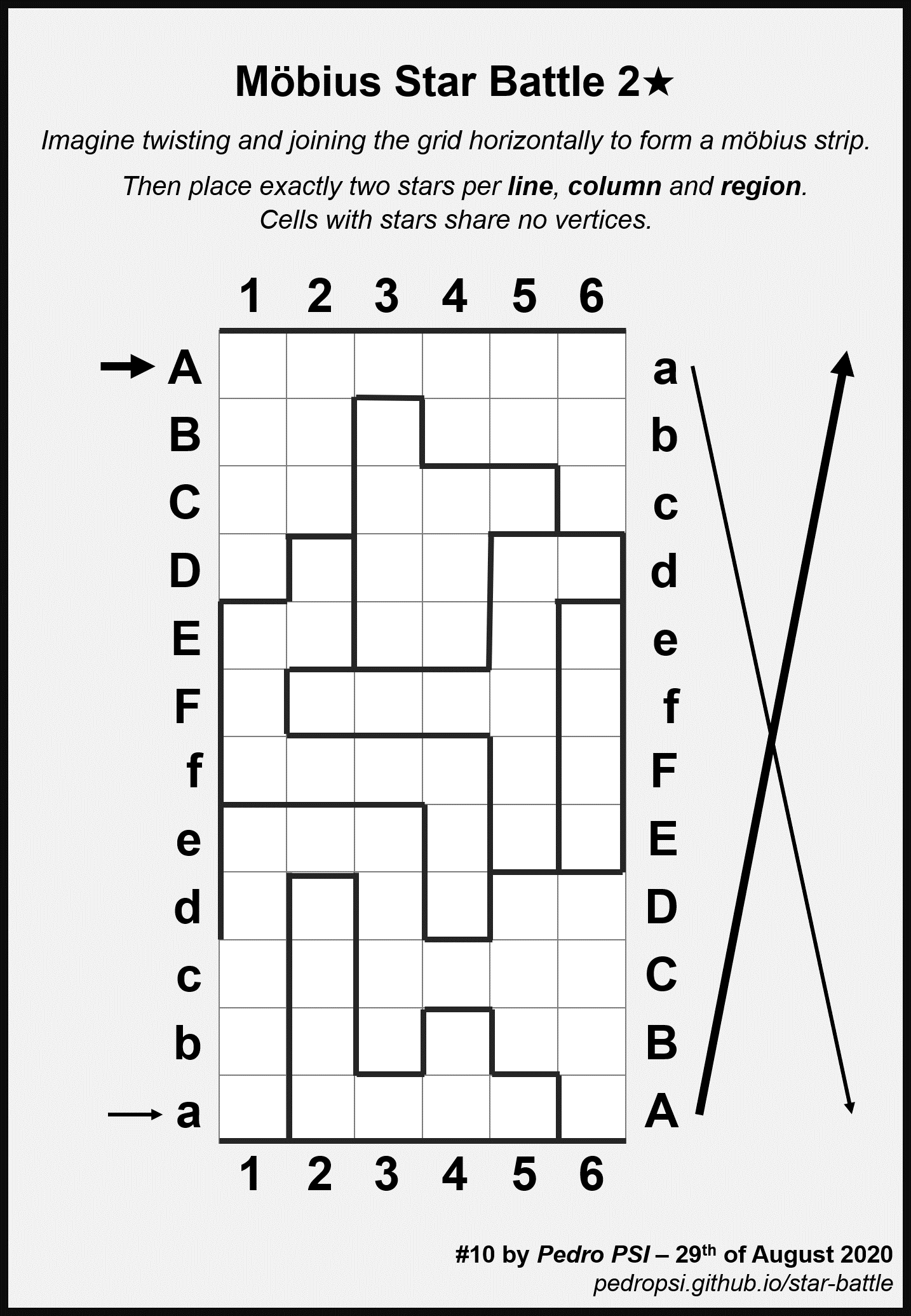
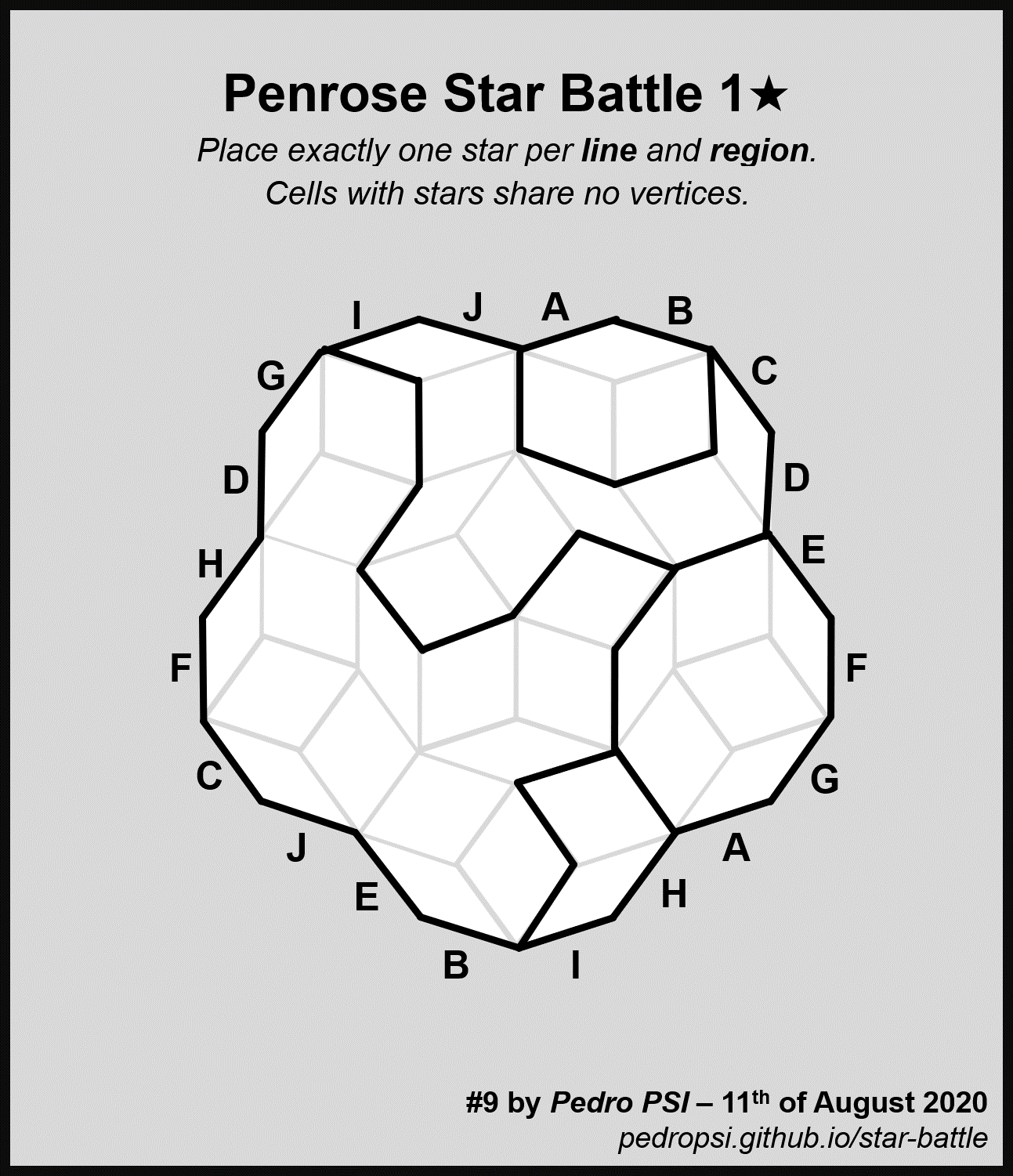
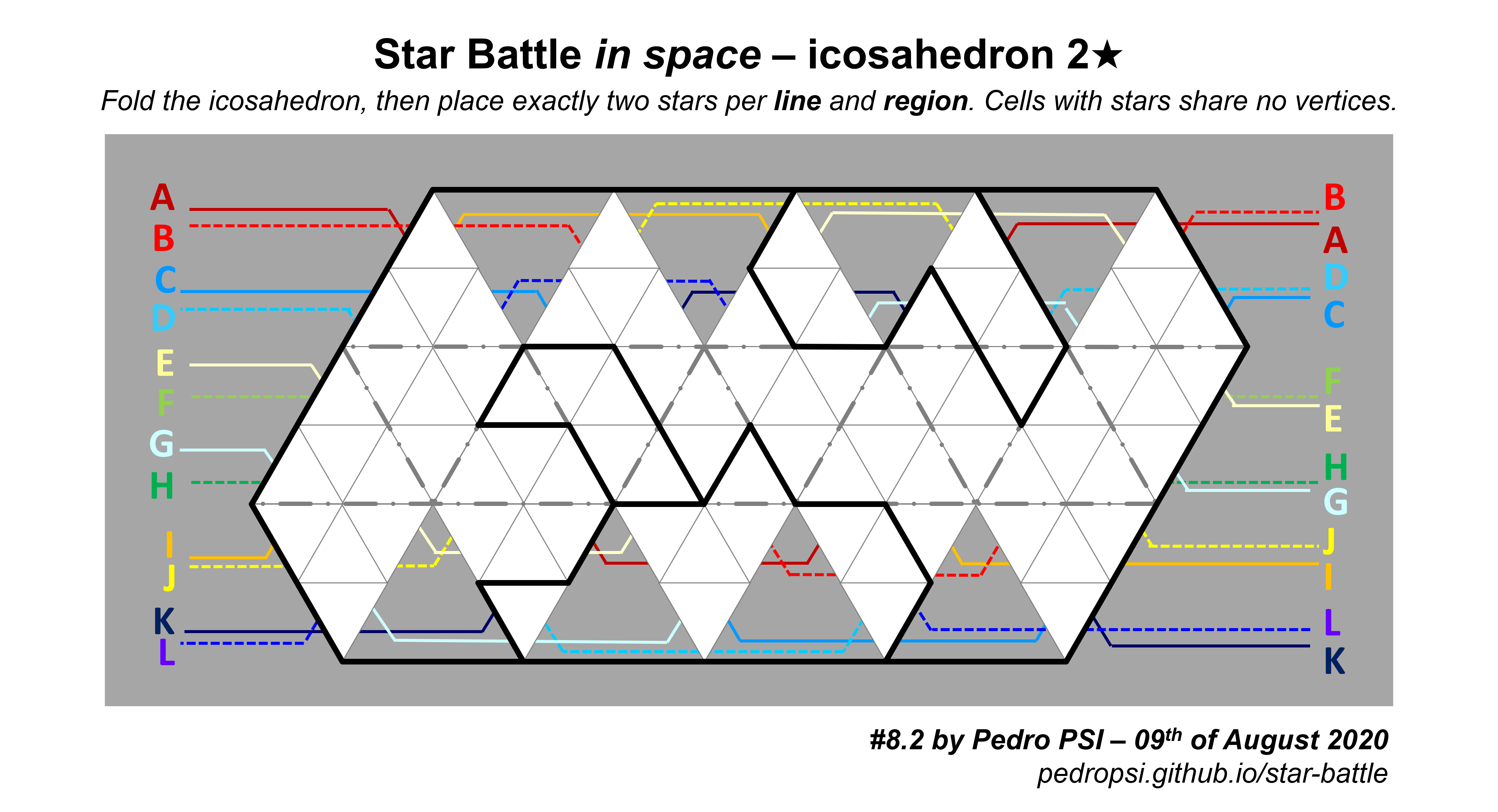
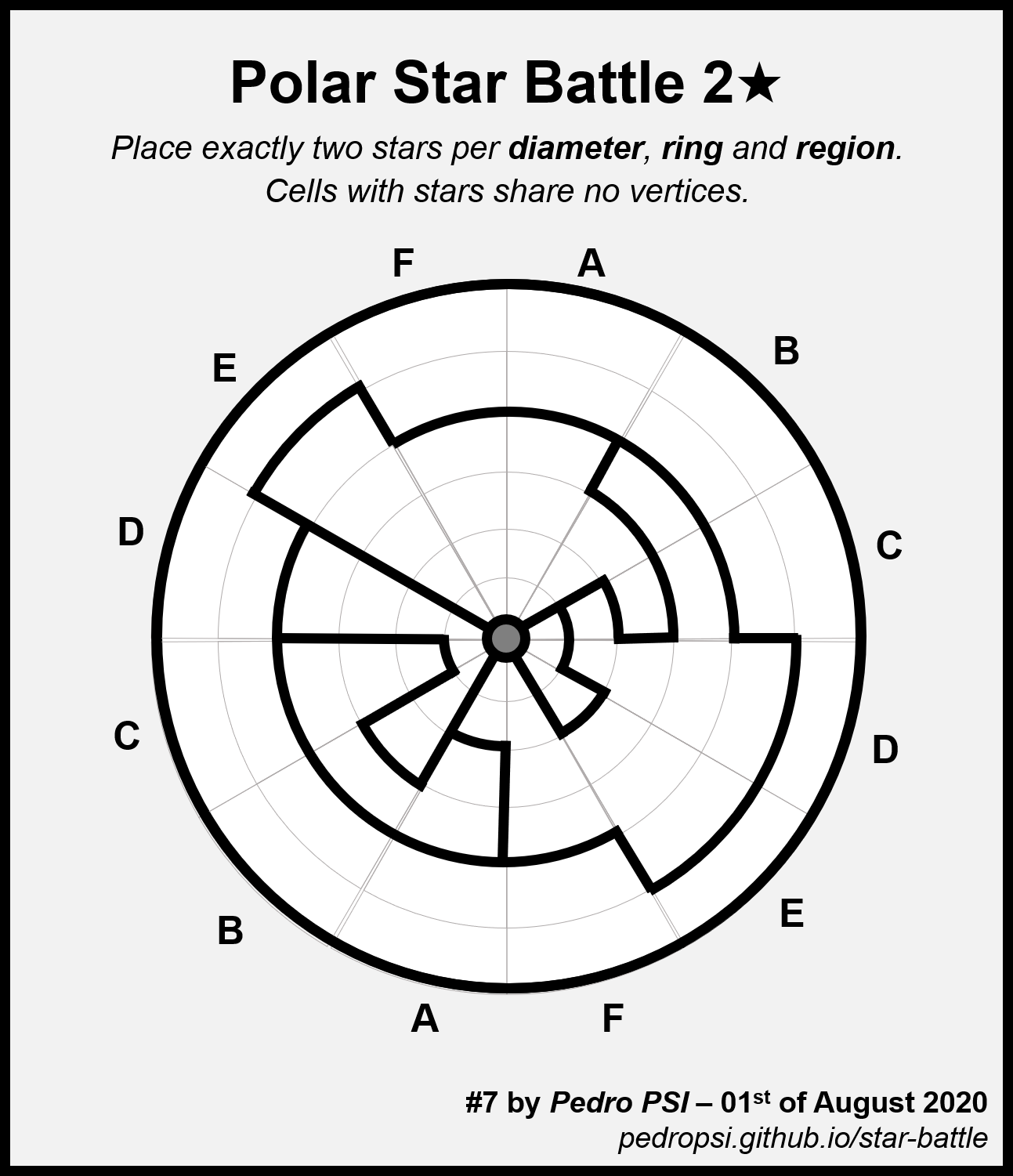
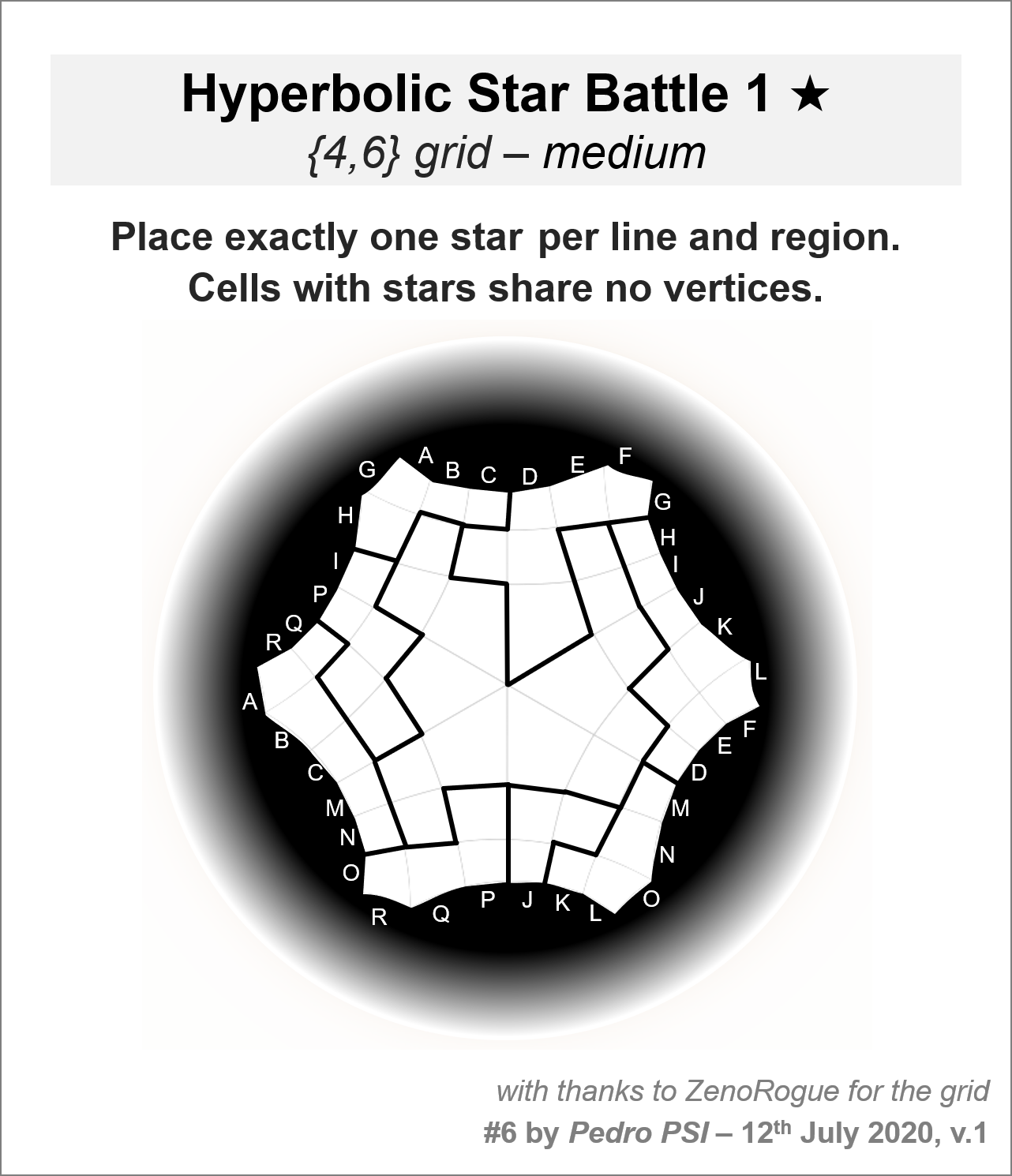
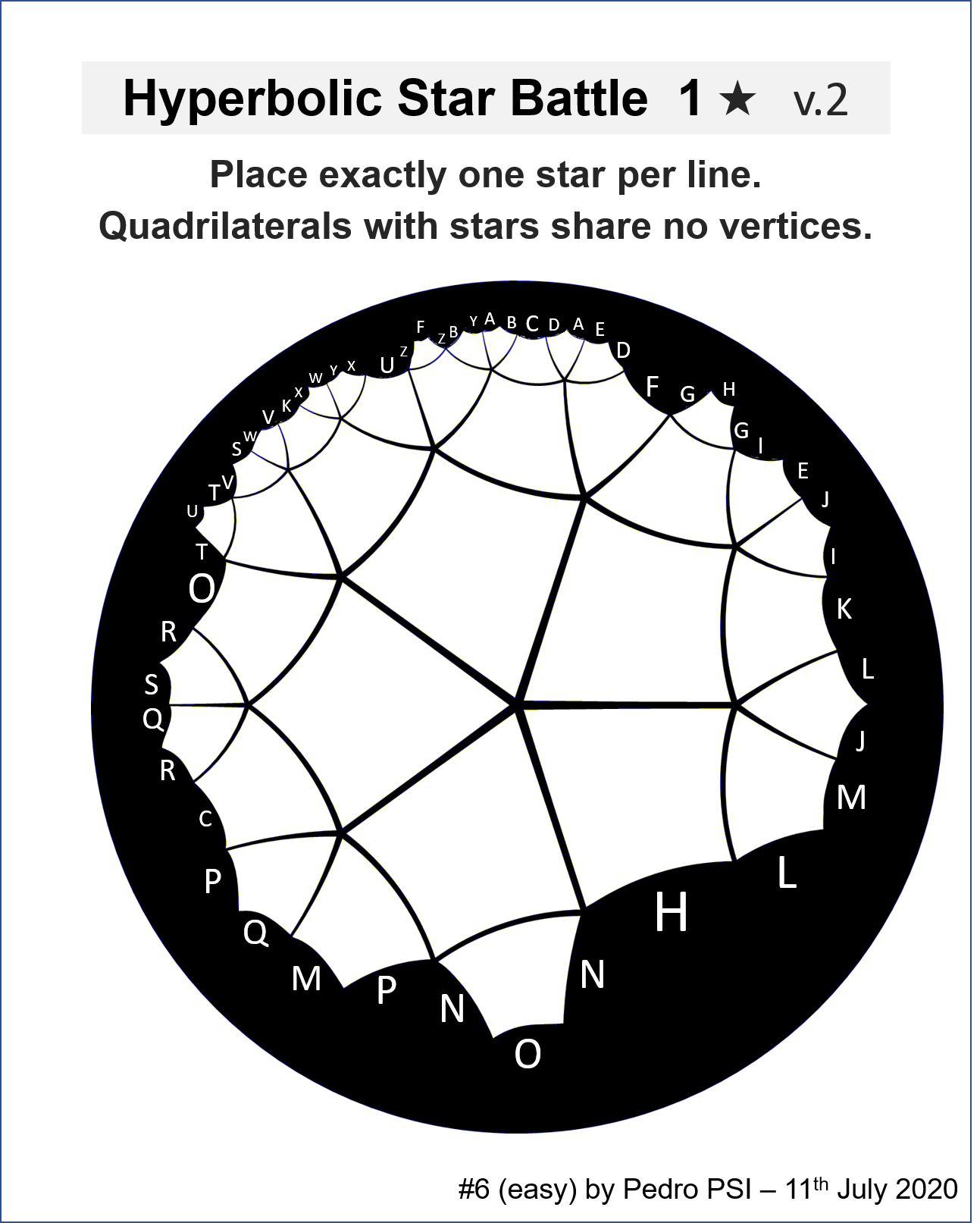
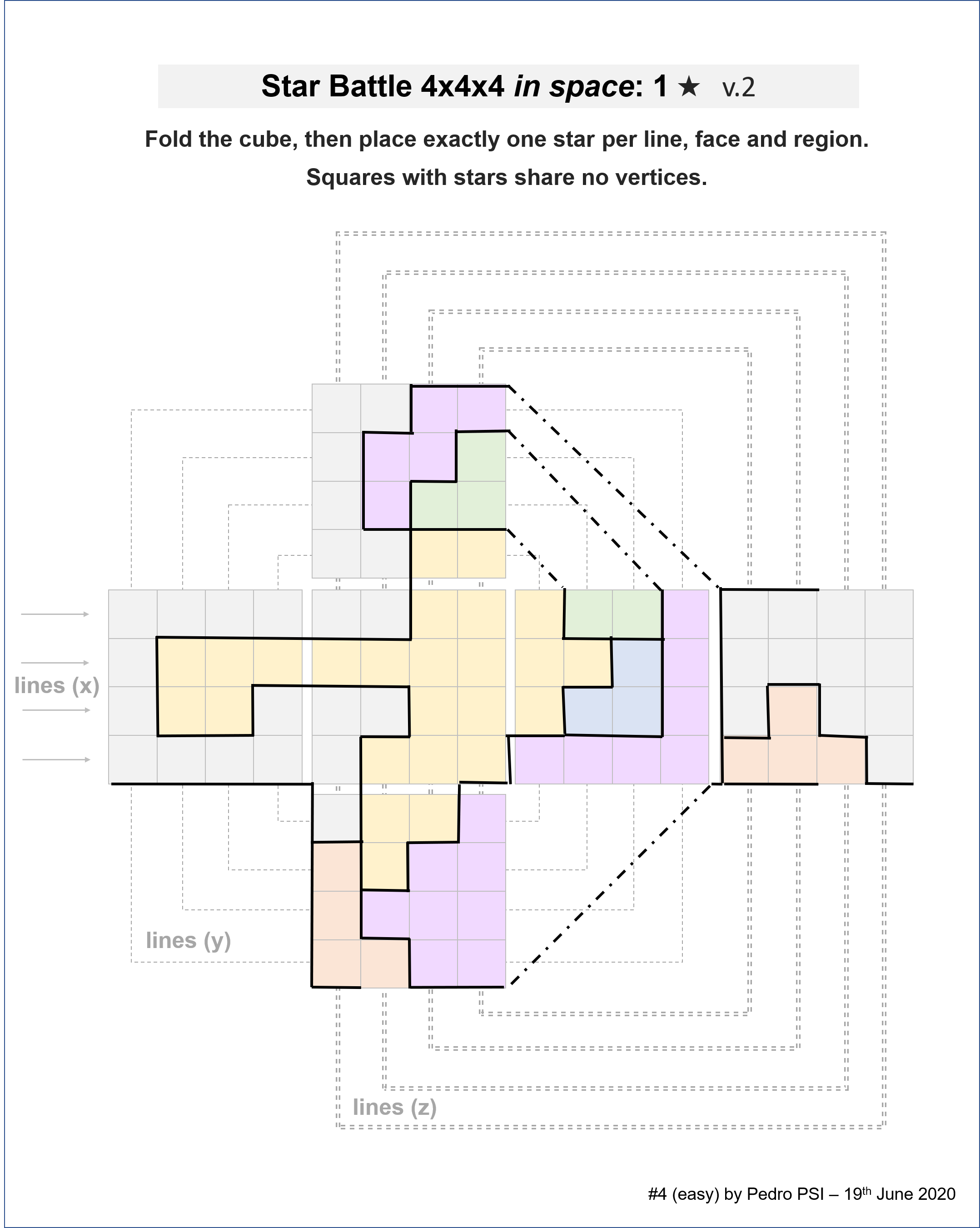
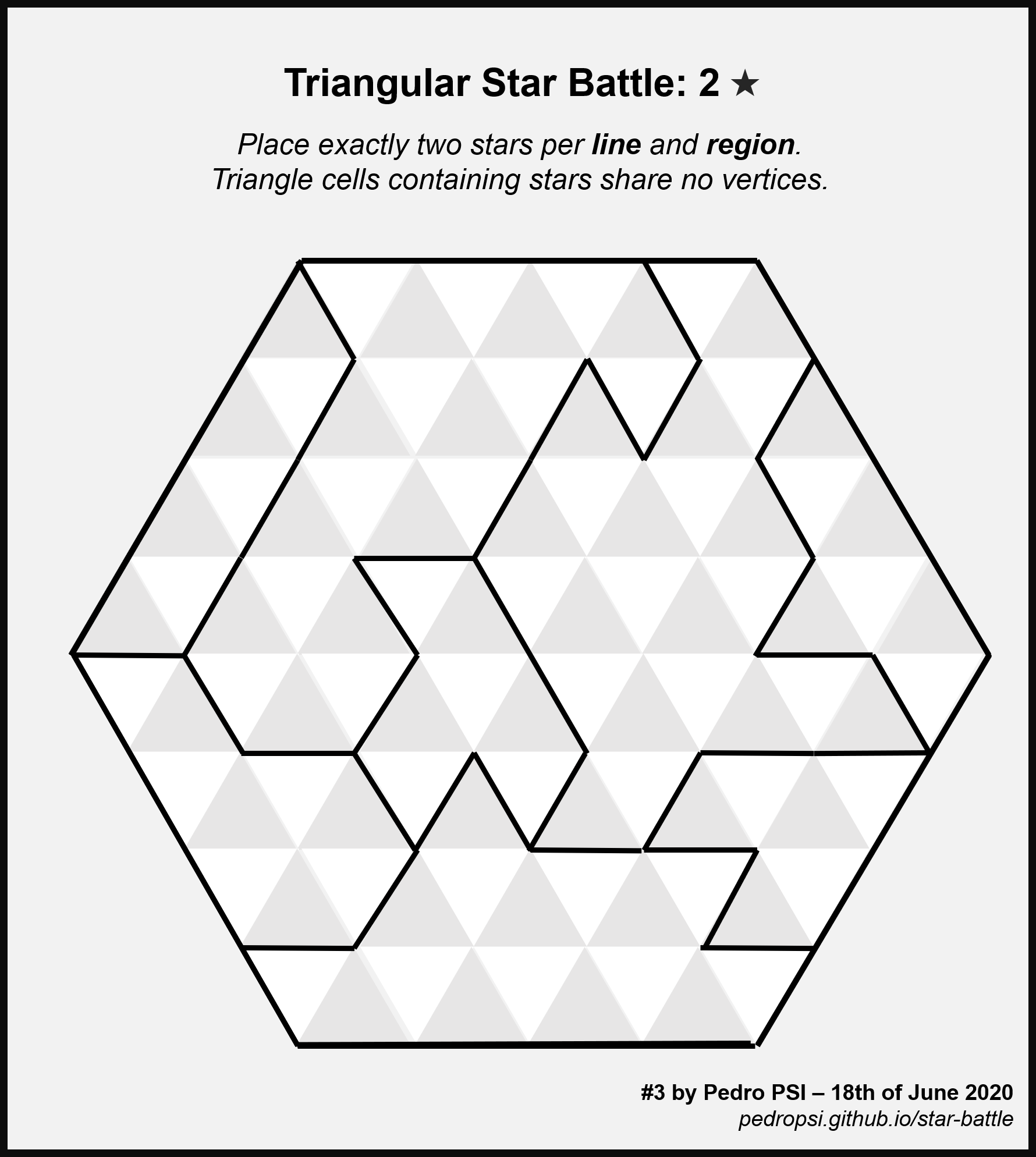
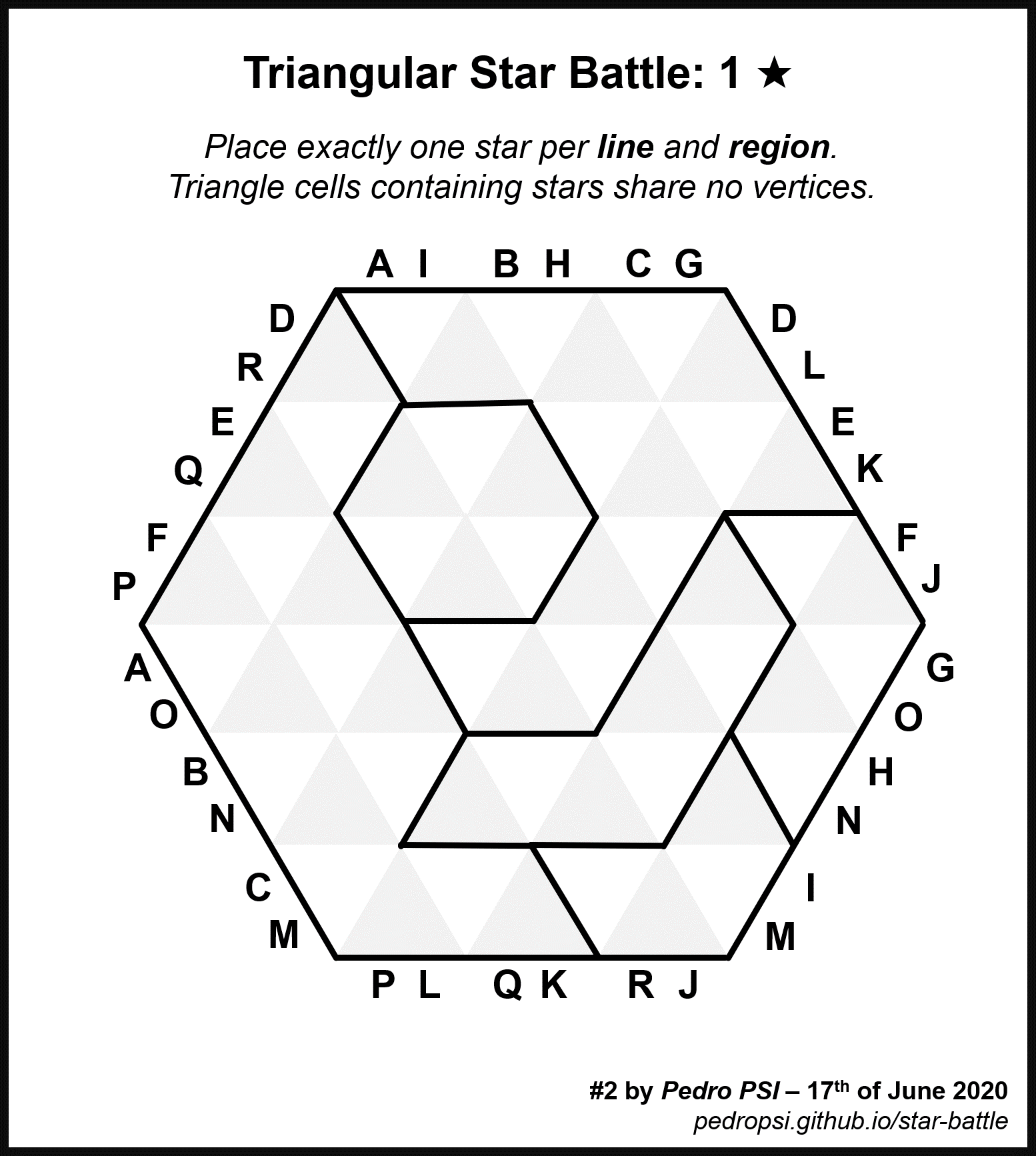
Interactive star battles
Pick one of the puzzles below to launch the interactive 3D star battle player in your browser, thanks to
Controls
Placing stars
To place a star,
Placing marks
To place a mark,
Panning
To rotate the puzzle,
Checking for errors
To check for errors press E: the regions will become white (correct number of stars), red (too many stars) or blue (missing stars). To return to the puzzle, press R.
Editing & Advanced
Open the options menu by pressing V. You can use this to make your own puzzles and edit the geometry!
Rules of Star Battle
In standard star battle puzzles, you must deduce which cells in the (square) grid to place a star on, so that every line and region have a set number of stars (1 star: easy, 2 stars: medium, more stars: hard). Importantly, no two stars may touch each other diagonally, because they may not share vertices.
Geometric star battle puzzles
In star battle puzzles using different geometries, the rules are identical. However, lines may bend or wrap-around, there may be more than two lines per cell, and the number of cells per vertex / vertices per cell may differ, even locally. For example:
- Planar square grid: 2 lines per cell, (1, 2 or) 4 cells per vertex, (3, 5 or) 8 adjacent cells.
- Cube square grid: 3 lines per cell, 3 or 4 cells per vertex, 7 or 8 adjacent cells.
- Planar triangular grid: 3 lines per cell, (2, 3 or) 6 cells per vertex, (6, 7 or) 12 adjacent cells.
- Planar Penrose grid: 2 lines per cell, 3 to 5 (?) cells per vertex, 8 to 11 (?) adjacent cells.
- Planar Amman-Beenker grid: 2 lines per cell, (…) 3 to 8 cells per vertex, (…) 8 to 12 adjacent cells.
Designing geometric star battle puzzles
You found an interesting grid geometry for a star battle puzzle! But… how do you make a puzzle?
At least two approaches can be distinguished, named forward or backward design. The forward approach is recommended for more interesting puzzles, while the backward approach can be a useful starting point or complement, especially in unfamiliar geometries. Both approaches can be combined, by e.g. forward designing to a desired solution.
Forward design approach
Starting with a blank slate, forward design involves a placing a small set of clues then partially solving the puzzle by exhausting all new deductions implied by those clues. Iterate until the puzzle is complete.
Catalogue of interesting small regions
Analyse all possible very small regions, e.g with 7 cells or less. In many cases, there are only a handful of compatible positions in those regions where +2 stars can be placed.
Adjacent constraints
Often, these small regions will constrain any adjacent regions, so by placing them strategically, larger adjacent regions can be constrained quickly. This works even if placing a single star per region.
Line constraints
Also, some small regions may completely exclude a line or exclude one of several lines.
Grouping lines or regions
Count the number of regions fully contained in a set of lines and how many stars would need to be placed in those regions. How many stars remain to be placed in those lines? If none, any remaining regions partially contained in those lines will be empty. If negative, you made a mistake. Otherwise you can use that information to constrain the non-overlapping portion of those regions.
Often, combined regions can do interesting things that they don't do alone.
Divide and conquer method
You split the grid into macro regions with a large but fixed number of stars. Then you split those macro regions incrementally until you arrive at the desired regions with the standard number of stars.
Backward design approach
The backward approach starts with the solution and attempts to make a puzzle around it. If used in isolation, it may lead to less interesting puzzles. Luckily, it can also be used to give a global direction to a forward design process.
Specifically for star battle, this approach has two steps:
- finding a constellation (easy)
- drawing a set of regions with a unique solution (hard)
Let r be the number of regions and n the number of stars per region. In total you'll need s = r x n stars.
Finding a constellation
Finding a star battle constellation means filling the grid with a set of s stars such that no starred cells share any vertices, and no more than n stars per line. Different geometries impose different rules on which vertices are shared, and on what constitutes a line.
First ensure the grid is not too small, so that it is not impossible to find a constellation. Start by counting s, the total required number of stars. Then notice how many cells are adjacent to each cell (there may be a couple different cases at the grid boundary), and try to discount any overlaps. Do s stars fit the grid? If not, keep enlarging the grid by one unit until they fit.
Then, with a grid in place, the following two imperfect methods are are sometimes useful for finding a constellation.
Symmetry method
Usually the grid has some symmetries that can be used. For instance, shall there be a m-fold rotational symmetry around a central point, often you can place a starting star anywhere away from the center, and then place m - 1 star copies at the symmetric points.
Knight's method
Place a starting star anywhere, and mark a ring of all its adjacent cells. Then place a second star outside and adjacent to the ring, as close as possible to the starting star, but on a different line. In a square grid, the second star is now a knight's move away.
Place more stars following the same pattern, until either you wrap-around a boundary and finish the constellation or you must stop. If you must stop, try to place a secondary starting star also adjacent to the starting ring and continue from there.
Drawing regions, while ensuring unique solutions
Finding a valid constellation is relatively easy, and with a single constellation you can make a huge number of star battle puzzles, by drawing different sets of regions. However, ensuring that the puzzle has a unique solution can be very time consuming. Here's one method.
Nucleation Method
- Place a valid constellation on the grid, with r x n stars.
- Draw r-1 small uninteresting regions to confine n x (r-1) stars, and name these regions crystals. Thus only n stars remain outside any crystal, in open territory.
- The smaller the initial crystals you pick, the easier it is to verify uniqueness. So change the crystals manually now until you ensure a unique solution. Then, in the last step, you'll transform a boring unique solution into an interesting unique solution.
- Pick one of the r-1 crystals. Grow it by one new cell into open territory where you can quickly check that no star from the crystal could be moved to the new cell (i.e., the new solution is still unique). Repeat this step until you're happy.
Credits
Star Battle Geometries by
Special thanks to
Thanks to